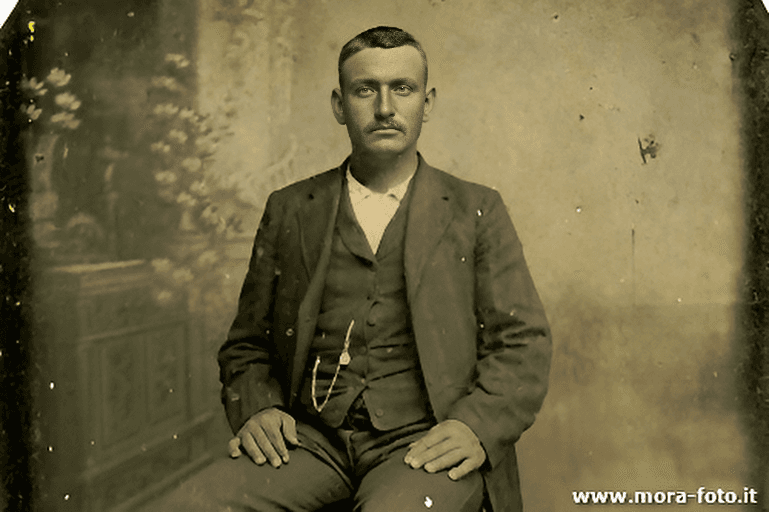
You can drop your own file here

Clarity AI: Image Upscaling and Enhancement Model
Edited by Segmind Team on November 5, 2025.
What is Clarity AI?
Clarity AI is an advanced image enhancement model that effectively improves low-resolution pictures into high-definition, without losing essential details or adding unnecessary visuals. It uses deep neural networks to enlarge images up to 16 times their original size while upholding textural details, outlines, and natural aspects close to the source image. The model works exceptionally well, performing several complex tasks: from reviving vintage photos to preparing print visuals or optimizing user-generated media, it renders professional-quality output through its simple web platform and flexible API access. Clarity AI is a perfect model for developers and creative professionals who need accurate visual results with controllable upscaling.
Key Features of Clarity AI
- Flexible Scaling: It can upscale images from 2x to 16x resolution with granular control over output quality
- AI-Driven Enhancement: It automatically sharpens details, refines textures, and reconstructs missing information intelligently
- Creativity Control: It can be used to adjust the enhancement style from photorealistic restoration to creative reinterpretation
- Prompt-Guided Upscaling: It uses natural language descriptions to influence aesthetic direction during enhancement
- Custom LoRa Support: It can utilize personalized style models for brand-consistent or specialized upscaling
- API-Ready Architecture: It can be seamlessly integrated into production workflows with RESTful API access
Best Use Cases
- Photography and Media: Users can use it to restore old photographs, enhance social media content, or prepare images for large-format printing without visible pixelation.
- E-commerce and Product Design: It can upscale product images for high-resolution displays, create zoom-friendly detail views, or enhance user-submitted photos.
- Game Development and VFX: It is capable of improving texture quality for legacy assets, upscaling reference materials, or enhancing concept art for presentation.
- Content Pipelines: It is ideal to build automated image enhancement workflows for publishing platforms, content management systems, or user upload processing.
Prompt Tips and Output Quality
- Start with the scale_factor parameter: use 4x for balanced enhancement, 8x for detailed prints, and 16x for maximum resolution.
- Use the creativity slider (-10 to 10) to control interpretation strength: set to 0 for faithful reproduction, positive values for enhanced details, and negative values for conservative upscaling.
- The prompt field guides aesthetic decisions; for realistic images, use neutral descriptions like "sharp photographic detail" or "natural texture clarity." For creative enhancement, describe desired qualities: "cinematic lighting with enhanced contrast" or "painterly texture details."
- When using reference images, provide high-quality sources for the best results.
- Custom LoRa models enable consistent brand styling or specialized enhancement patterns across batches.
FAQs
What's the difference between Clarity AI and traditional upscaling?
Unlike traditional interpolation methods, which blur or pixelate images when enlarged, Clarity AI uses neural networks to intelligently reconstruct missing details based on learned patterns from millions of images.
How does the creativity parameter affect output?
The 0 value faithfully preserves the original image character. Positive values perform interpretive enhancement and detail reconstruction, while negative values prioritize conservative upscaling with minimal AI interpretation.
Can I use Clarity AI for batch processing?
Yes, the API supports automated workflows; you can integrate it into your pipeline for processing multiple images with consistent parameters.
Does Clarity AI work better with certain image types?
Clarity AI is perfect when it comes to upscaling photographic content, product images, and artwork. Additionally, it smoothly handles faces, landscapes, textures, and architectural details.
What's the maximum input image size?
Input size depends on the selected scale_factor; the model processes standard image formats, with output resolution determined by original dimensions multiplied by the scale_factor.
How do I optimize for speed vs. quality?
You can strike a balance based on your preferred quality and latency; lower scale factors (2x-4x) process faster while higher values (8x-16x) require more compute time but deliver maximum detail enhancement.
Popular Models